

Public transit is becoming increasingly connected. Today’s buses and trains support a growing range of applications, from real-time vehicle tracking and fare collection to onboard video, passenger Wi-Fi and fleet management systems.
At the American Public Transportation Association (APTA) TRANSform & EXPO 2026, held Oct. 4-7 in Chicago, Semtech connected with transit agencies, system integrators and partners to discuss the evolving connectivity requirements of public transportation. Three themes emerged from those conversations: supporting increasingly connected vehicles, modernizing without replacing existing systems and demonstrating the long-term value of connectivity.
At the heart of these discussions was a fundamental requirement: reliable, secure and manageable connectivity.
As transit agencies introduce new capabilities, they need visibility into network performance, control over managing connectivity and the flexibility to adapt as requirements change.
Here are three takeaways from APTA 2026 and what they mean for the communications infrastructure supporting modern transit.
1. Connected Operations Are Raising the Stakes for Transit Onboard Networks
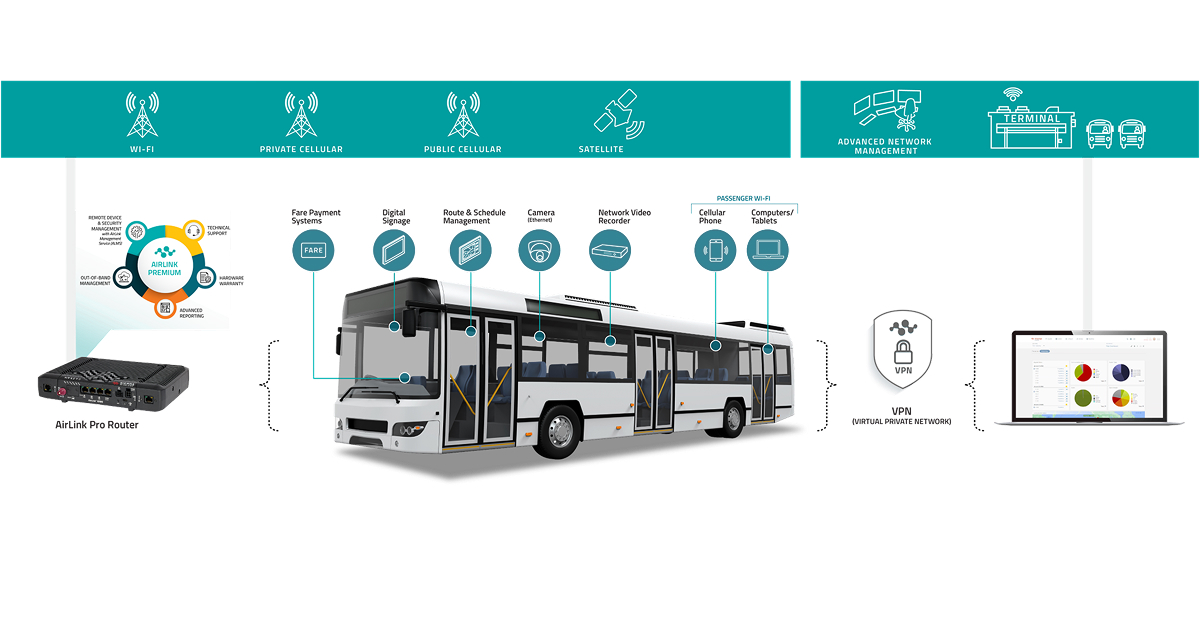
Transit vehicles are becoming increasingly sophisticated mobile technology platforms. A single bus may support dispatch communications, automatic vehicle location, electronic fare collection, video surveillance, passenger information, and public Wi-Fi.
Each application places different demands on the onboard network. Some require continuous communication with central systems. Others generate substantial amounts of data that must be transferred efficiently.
As more applications share the same infrastructure, agencies need to consider how connectivity will perform under changing conditions.
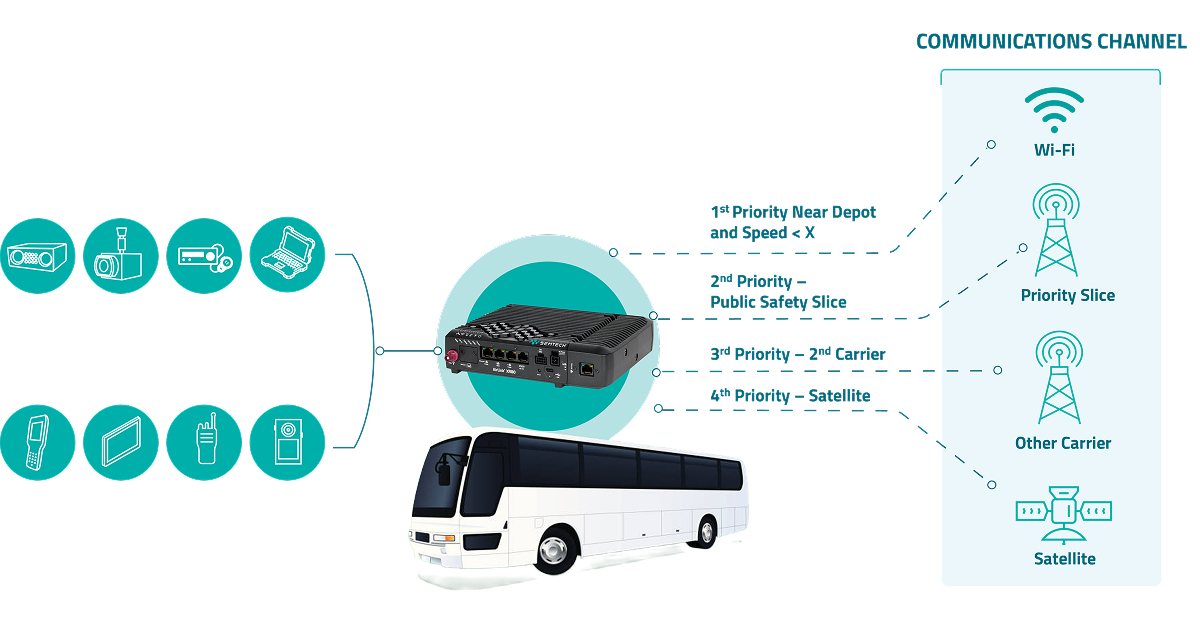
Resilience is one part of the equation. Vehicles move through areas with varying cellular coverage, network congestion and other connectivity challenges. Access to multiple cellular networks, Wi-Fi and, where supported, satellite connectivity can provide additional communications options. Appropriate failover configurations can help maintain connectivity when a preferred connection becomes unavailable.
Managing competing demands is another. As unlimited data plans become more common and cellular data costs decrease, some transit agencies are using 5G to transfer large volumes of data, including video. Others use high-speed Wi-Fi to complement cellular connectivity, particularly for data offloading at depots.
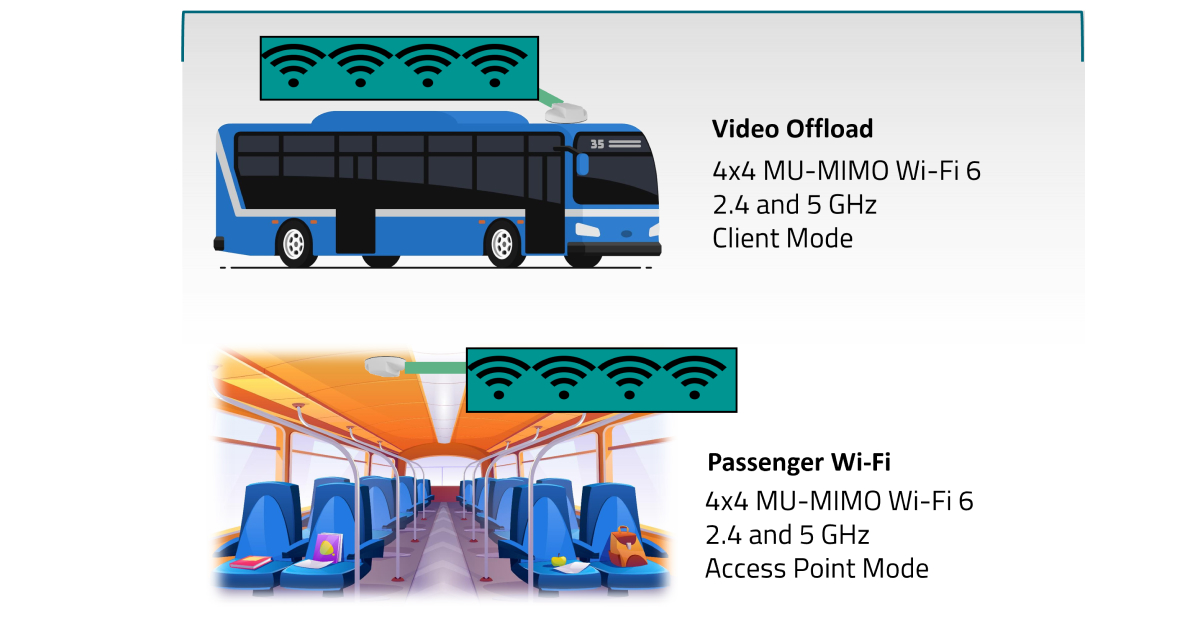
Consider a bus returning to its depot after a day in service. Its onboard surveillance system may have accumulated gigabytes of video that need to be transferred, while passengers are still using the vehicle’s Wi-Fi network. The vehicle may have only a short window to complete that transfer before returning to service.
This illustrates why network architecture matters as much as wireless specifications. For example, the dual Wi-Fi radios in the AirLink® XR90 5G router allow passenger Wi-Fi and high-volume video offloading to use separate radios. This helps prevent the two activities from competing for the same Wi-Fi radio’s capacity.
Not every transit deployment requires this capability. The important consideration is matching the connectivity architecture to the applications the vehicle must support, both today and as requirements evolve.
2. How Can Transit Agencies Modernize Without Starting Over?
Agencies want new capabilities, but not at the expense of replacing what already works. Scheduling platforms, vehicle location systems, onboard computers, and fare equipment represent years of investment. Replacing them is often neither practical nor financially sustainable.
That puts a clear requirement on the connectivity layer: it should fit into existing systems without adding unnecessary complexity. In practice, that means two things.
Working with the technology already in the vehicle
A router rarely operates alone. It works alongside rugged computers, docking hardware and other onboard systems, making compatibility important. For example, an AirLink router can work alongside Getac rugged computers and Havis docking hardware as part of a field-proven connected-vehicle integration. This illustrates how connectivity can fit into an existing in-vehicle computing environment without requiring agencies to start from scratch.
Working the way the agency works
Agencies have different IT policies, security requirements and management preferences. Some favor cloud-based management, while others require on-premises solutions. Connectivity infrastructure should accommodate those requirements rather than force agencies to change established processes.
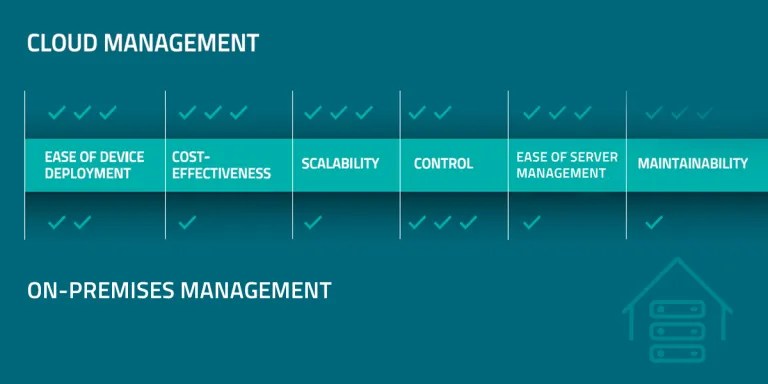
Choosing a router management model is less about preference and more about operational fit. Learn more in our blog post: Cloud vs. On-Premises Device Management: There’s No One-Size-Fits-All.
The best modernization introduces new capabilities without disrupting operations that already work.
3. Tighter Transit Budgets Put the Focus on Long-Term Value
Funding pressures were another prominent topic at APTA 2026. As agencies balance service requirements, modernization plans and financial constraints, technology investments must demonstrate practical value.
It’s easy to treat connectivity as a cost to minimize. But fare collection, passenger information, dispatch, and onboard video all depend on it. Reliable connectivity helps agencies realize the value of those investments. When connections fail, the applications they support may be disrupted.
Seen this way, connectivity is more than a cost center. It’s a contributor to operational value, and its return should be considered over the life of the equipment.
Three areas are particularly important:
- Protecting existing technology investments: Agencies have invested in systems that depend on connectivity to deliver their intended benefits. Reliable connections help maintain access to real-time passenger information, support onboard video transmission and keep operational systems communicating. The more consistently these applications perform, the more value agencies can derive from their investments.
- Reducing ongoing management costs: Remote management allows IT teams to monitor router status, investigate connectivity issues and deploy configuration or firmware updates across a fleet. Resolving problems remotely, where possible, can reduce maintenance visits and the time required to manage distributed equipment.
- Making better use of vehicles and resources: Connectivity can also provide access to information that helps agencies manage fleet operations. For example, supported AirLink solutions can provide vehicle diagnostics and mobility reporting that help identify potential maintenance issues, monitor vehicle usage and assess driving patterns. These insights can support more informed decisions about maintenance and fleet efficiency.
The goal is not simply to purchase the least expensive connectivity equipment, but to invest in infrastructure that supports operational requirements and delivers value throughout its service life.
From Connected to in Control: Transit Connectivity After APTA 2026
APTA TRANSform & EXPO 2026 highlighted an industry focused on improving public transportation while preparing for future demands.
As vehicles take on more connected applications, how can transit agencies stay in control? A connectivity solution that performs reliably as conditions change, works with existing systems and policies and delivers value throughout its service life is a strong place to start.
Wherever you are in your transit connectivity journey, we’re here to help. Thank you to everyone who shared their challenges and priorities with us at APTA 2026. We’d be glad to continue the conversation.

Semtech®, the Semtech logo and AirLink® are registered trademarks or service marks of Semtech Corporation or its affiliates. Other product or service names mentioned herein may be the trademarks of their respective owners.