

Managing and securing connected edge devices across critical infrastructure is rarely simple. Networks, policies and IT environments vary widely, and the tools used to manage devices need to adapt accordingly.
AirLink® Manager (AM) and AirLink Mobility Manager (AMM) 2.18.1 is built around that flexibility. This release adds support for the latest Semtech 5G Reduced Capability (5G RedCap) routers — joining the XR series already supported in version 2.18.0 — and brings the platform’s most-used mobility reports to AirLink OS devices. It also adds deployment options for today’s most widely adopted enterprise hypervisor environments and continues Semtech’s commitment to security across every release.
For organizations in government, utilities, public safety, and critical infrastructure that require on-premises or air-gapped device management, AM and AMM provide a proven, feature-rich option: one that now covers the full range of current AirLink router models and fits inside the IT infrastructure operators already run.
Why AirLink Manager and AirLink Mobility Manager?
For some organizations, putting device management in the cloud is not an option. Internal policies, data sovereignty requirements and regulatory compliance obligations can all make on-premises deployment a firm requirement rather than a preference, regardless of how capable a cloud platform might be. If you’re considering the factors that drive this decision, our cloud vs. on-premises device management overview is a useful starting point.
AirLink Manager works for fixed infrastructure deployments: utilities managing electric grids and pipelines, government agencies and industrial operations. AirLink Mobility Manager extends those capabilities with advanced fleet and vehicle management, giving operators real-time visibility into vehicle location, movement and network performance in the field.
On-premises management is not a category where all platforms are equal. Running a management platform inside your own infrastructure is inherently more complex than deploying a cloud solution, and it demands a platform with deep operational maturity — one that has been stress-tested across diverse operational environments. Hundreds of organizations, including federal agencies, transit authorities, public safety organizations (police/fire/emergency medical services), and major utilities across North America have run AM and AMM for over a decade. Many operate multiple servers with high-availability failover, so management stays up even if a data center goes down.
For regulated industries with the strictest requirements, AM and AMM also support fully air-gapped deployments — completely isolated from external networks, with no cloud dependencies of any kind. That level of isolation is not available across all on-premises platforms, and for organizations where it is non-negotiable, this is a critical differentiator.
Semtech offers flexible management options to fit different operational requirements. For organizations where on-premises or air-gapped deployment is a firm requirement, AM and AMM are a proven, purpose-built solution.
One Fleet, One Platform
For organizations already running AM/AMM to manage MGOS or ALEOS® devices such as the RV55 or RV50X, AM/AMM 2.18.1 adds an important option: the ability to bring Semtech’s latest 5G RedCap routers — the AirLink RX400 and EX400 — into the same management environment. For organizations running mixed fleets, that means fewer tools, fewer interfaces and consistent management workflows across the entire device lineup.
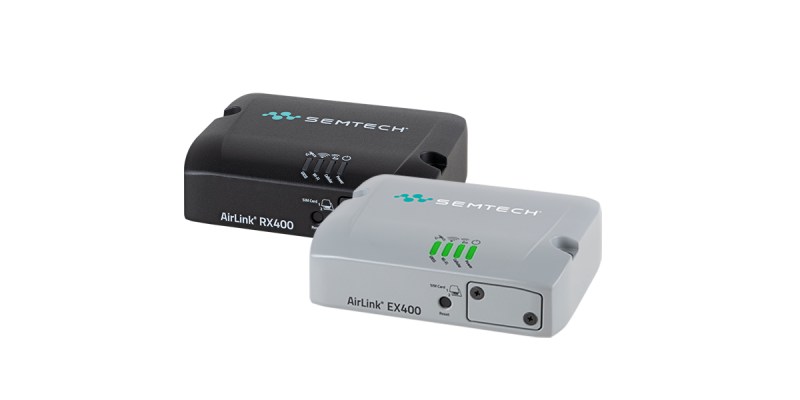
Semtech AirLink 5G RedCap Routers: RX400 and EX400
Administrators also gain more control over when configuration changes take effect. Scheduled template changes — currently available for MGOS and ALEOS devices — allow updates to be pushed during maintenance windows or off-peak hours instead of immediately, reducing disruption during active operations.
Visibility That Drives Better Decisions
Some of the platform’s most-used reports are now available for AirLink OS devices, the same tools that fleet operators across transit, public safety and utilities have relied on for years, extended to cover the full device lineup.
Coverage Maps and Coverage Trails reports show where devices have travelled and what network coverage and technology they experienced along the route. For transit agencies, first responders and field-service organizations, these reports provide a ground-level view of real-world network performance that static monitoring cannot replicate.
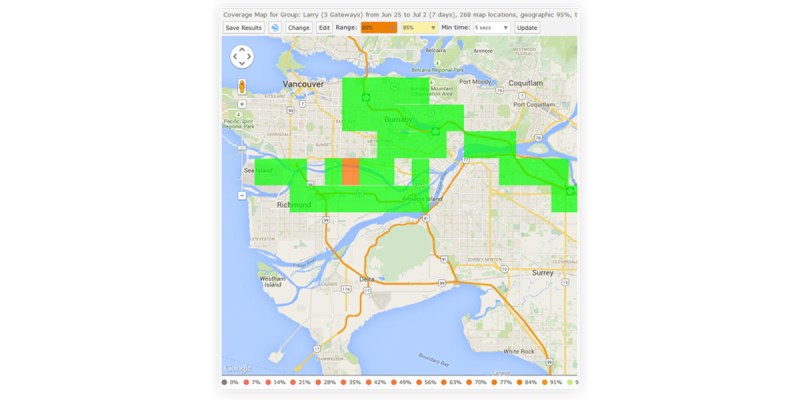
The Gateway Trips report delivers a structured view of device journeys, including activity within customer-defined geofences, helping operators analyze routes, identify patterns and support operational planning.
The Link Utilization report is frequently the first stop for troubleshooting investigations. It shows how cellular connections are being used over time, helping teams identify overloaded links, underperforming sites and connectivity issues before they affect operations.
Built for Enterprise and Government Environments
Many enterprise and government organizations are actively re-evaluating their virtualized infrastructure, and AM/AMM 2.18.1 is designed to meet them where they land. The release adds support for Nutanix and Microsoft Hyper-V, two of the most popular hypervisor environments in enterprise and government IT, alongside the existing VMware ESX support already available in the platform.
This means organizations can now deploy AM/AMM inside the virtualized environments they already run without the need for a dedicated physical server. Semtech provides the ISO image and installation support; performance configuration stays in the hands of customers’ own IT teams, who know their environments best.
For the government agencies, utilities and public safety organizations that AM and AMM are designed for, a strong security posture is a baseline requirement. As a Common Vulnerabilities and Exposures (CVE) Numbering Authority (CNA), Semtech is authorized to assign and publish CVE records for vulnerabilities affecting its products, providing customers with direct, timely and transparent vulnerability information. Each AM/AMM software update release addresses vulnerabilities according to Semtech’s security policy. Version 2.18.1 adds software composition analysis (SCA) scanning alongside regular penetration testing, combining both approaches for a more comprehensive view of component-level security across the software stack.
Continuing the Journey
AM/AMM 2.18.1 builds on the initial AirLink OS support introduced in version 2.18.0, adding hardware coverage, reporting depth and deployment flexibility that operations teams have been asking for. Development continues, with the next release targeting additional AirLink OS capabilities, expanded enterprise infrastructure support and further security updates.
Ready to Simplify Your Fleet Management?
- Explore AirLink Manager and AirLink Mobility Manager to see the full capabilities of on-premises and hosted management for your AirLink fleet.
- Contact Semtech to discuss whether AM/AMM is the right fit for your deployment — and to compare your options across cloud, hosted and on-premises management.
FAQs: AirLink Manager, AirLink Mobility Manager and CVE Numbering Authorities (CNAs)
What is the difference between AirLink Manager and AirLink Mobility Manager?
AirLink Manager (AM) is designed for fixed infrastructure deployments — utilities, government agencies and industrial operations. AirLink Mobility Manager (AMM) extends those capabilities with fleet and vehicle management, giving operators real-time visibility into vehicle location, movement and network performance. AMM is available as a cloud or on-premises platform, while AM is only available on-premises.
What is on-premises router management?
On-premises router management uses a management platform deployed inside an organization’s own network. This model supports environments that require internal hosting, data sovereignty or fully air-gapped operations.
What is a CVE?
A Common Vulnerabilities and Exposures (CVE) identifier is a standardized reference for publicly disclosed cybersecurity vulnerabilities. CVEs give vendors, security teams and customers a consistent way to track and communicate about specific vulnerabilities across the industry.
What is a CVE Numbering Authority (CNA), and why does it matter?
A CVE Numbering Authority (CNA) is an organization authorized by the CVE Program to assign CVE identifiers and publish CVE records within its area of responsibility. The CVE Program is operated by MITRE and sponsored by the Cybersecurity and Infrastructure Security Agency (CISA), a division of the U.S. Department of Homeland Security. CNA status allows an organization to manage vulnerability disclosure directly — assigning identifiers, publishing records and communicating with customers and researchers without routing through a third party. It demonstrates that an organization has established responsible processes for identifying, assessing and disclosing vulnerabilities transparently.
What does Semtech’s CNA status mean for customers?
As a CNA, Semtech proactively scans for and reports vulnerabilities in its own products, rather than waiting for external researchers or third parties to surface them first. Semtech can identify, assign and publish CVE records for vulnerabilities affecting eligible Semtech products and communicate that information directly to customers, researchers and industry partners. For utilities, government agencies, transit operators, and other critical infrastructure organizations with formal vulnerability-management programs, this supports timely access to accurate information about identified issues and available remediation guidance.
Does CNA status make products more secure?
CNA status does not prevent vulnerabilities from occurring. It demonstrates that Semtech has established processes for finding, assessing, disclosing, communicating, and remediating vulnerabilities in a transparent and responsible way, and for providing customers with the information they need to manage their own risk.
To learn more about AirLink Manager or AirLink Mobility Manager and Semtech’s 5G RedCap Solutions, visit our router solutions page below.

Semtech®, the Semtech logo, AirLink®, and ALEOS® are registered trademarks or service marks of Semtech Corporation or its affiliates. Other product or service names mentioned herein may be the trademarks of their respective owners