

For more than a decade, LTE has provided the wireless foundation for connected energy infrastructure. Utilities use it to link field devices, monitor assets and maintain operational visibility across wide service territories. But as mobile network roadmaps advance, a strategic question is emerging: does deploying new infrastructure on LTE still make sense over the long term?
Energy systems are built for longevity. Field equipment commonly remains in service for 10, 15 or even 20 years. Connectivity decisions made today must remain viable across that same horizon, even as cellular technologies, carrier investments and spectrum allocations continue to evolve.
The Industrial IoT Connectivity Challenge
LTE remains broadly available and will operate for years to come. At the same time, network operators are steadily reallocating spectrum from 4G toward 5G and concentrating investment on 5G Standalone (SA) deployments.
For utilities, this creates a lifecycle alignment issue. Grid assets are deployed for decades, while LTE ecosystems will gradually transition and eventually sunset. This misalignment can lead to unplanned device replacement, additional truck rolls and budget pressure, driving up total cost of ownership over time. While this creates urgency to plan beyond LTE, moving directly to full 5G broadband is not an obvious solution for most utility use cases.
Why Full 5G Broadband is Often a Mismatch
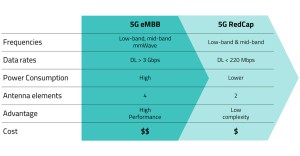
5G Enhanced Mobile Broadband (eMBB) was designed for high-throughput applications such as video streaming, immersive media and dense urban connectivity. However, utility field devices operate under very different conditions.
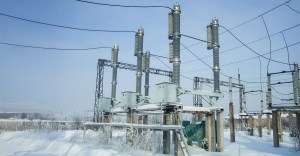
Most grid-connected endpoints require:
- Modest and predictable data rates
- Low power consumption
- Long operational life
- Dependable performance in remote or harsh environments
For utility field devices, full-scale 5G broadband introduces unnecessary complexity, higher power draw and increased cost. It solves challenges utility deployments do not have while introducing new operational trade-offs. This leaves a gap between aging LTE networks and high-performance 5G broadband that utilities now need to address.
A Right-sized Alternative: 5G RedCap
5G Reduced Capability (RedCap) was created specifically to fill this middle ground. Standardized in 3rd Generation Partnership Project (3GPP) Release 17 and native to 5G SA networks, RedCap is designed for devices that require the longevity and roadmap alignment of 5G without the overhead of full broadband performance.
For critical infrastructure operators, 5G RedCap offers:
- Alignment with long-term 5G network evolution unlocking new Stand Alone (SA) benefits
- Lower-power requirements and simpler device profiles
- Performance well-suited to telemetry, monitoring and control applications
5G RedCap is not a temporary bridge technology, but a standards-based connectivity tier built for the long-lived industrial deployments common across the energy sector.
Learn More
Key Questions for Utilities to Ask
As 5G RedCap becomes commercially available, utilities should evaluate solutions with the same rigor applied to any infrastructure investment. Important considerations include:
- Lifecycle fit: Will the technology remain supported throughout the asset’s service life?
- Network availability: Does RedCap operate in target regions, and does the solution support LTE fallback where needed?
- Environmental performance: Does the hardware meet field deployment requirements?
- Interoperability: Can it integrate with existing legacy protocols and devices?
- Future compatibility: Will my device support future security and cellular standards?
- Management approach: Can devices be managed in cloud, on-premises or air-gapped environments?
- Vendor stability: Does the supplier have experience supporting long-term infrastructure deployments?
Asking these questions early helps avoid costly redesigns later.
From Technology to Deployment Reality
In practice, utility connectivity involves more than cellular access alone. Hardware durability, device management, regulatory compliance, and long-term operational support all influence deployment success.
Organizations that have guided utilities through previous transitions, from 2G to 3G and from 3G to 4G LTE, bring valuable experience to the move toward 5G-era infrastructure.
Semtech has supported critical communications in energy and industrial environments for decades. Building on that foundation, we are introducing 5G RedCap routers designed for critical infrastructure use cases, balancing performance, energy efficiency, and long-term serviceability while integrating into existing management and operational models.
Rather than treating 5G as a universal upgrade, this approach reflects a growing industry understanding that connectivity evolution must adapt to grid realities, not the reverse.
The AirLink® RX400 5G RedCap router exemplifies this approach. Designed for the harsh realities of field deployment, the RX400 combines rugged, industrial-grade design with industry-leading power efficiency, consuming less than 1W at idle.
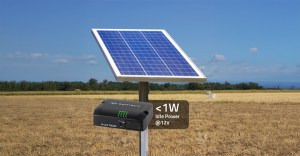
It supports both 5G RedCap and LTE Cat 4 fallback, enabling connectivity even in regions where 5G SA networks are still rolling out. The router offers flexible management options (cloud-based or on-premises) to meet the various needs of energy organizations. For utilities already using Semtech’s popular AirLink RV and RX series, migration is seamless: the RX400 shares the same compact footprint and mounting, as well as the familiar 2x antenna configuration. This avoids the need for installation redesigns and allows direct replacement without modifying existing enclosures or infrastructure.
Planning the Next Stage of Grid Connectivity
The transition beyond LTE does not demand immediate action, but it does require planning. As utilities refresh aging deployments and design new infrastructure, 5G RedCap presents a practical forward path: align with future networks while respecting the operational demands of energy systems.
For organizations shaping their next connectivity strategy, the most important step is to begin the evaluation process before long-lived field assets are committed to technologies that may not mature alongside the infrastructure they support.
Ready to Explore Your Path Beyond LTE?
→ Talk with our connectivity experts about how 5G RedCap fits your grid modernization roadmap.

Semtech®, AirLink® and the Semtech logo are registered trademarks or service marks of Semtech Corporation or its affiliates. Other product or service names mentioned herein may be the trademarks of their respective owners.