

In many mission-critical deployments, routers are installed in electrical substations, water treatment plants, oil and gas facilities, or remote monitoring sites—configured once, then expected to run quietly in the background indefinitely. It’s not uncommon to see an industrial cellular router returned from the field still running the same firmware it shipped from the factory with years earlier.
For a long time, many industrial operators and operational technology (OT) network managers lived by a “set and forget” mindset. When cybersecurity threats were less sophisticated, that approach could be sufficient. Those days are long past. Today’s OT and Industrial Internet of Things (IIoT) networks are exposed to more security vulnerabilities, stricter compliance requirements and faster operational environments. Without proactive lifecycle management, organizations risk falling behind security standards and risk missing critical firmware updates or losing visibility into the edge infrastructure they depend on every day—from Supervisory Control and Data Acquisition (SCADA) systems to remote terminal units (RTU).
This blog explores why router management has become central to long-term network resilience and performance in critical infrastructure environments, how cloud-based and on-premises network management approaches compare, and how organizations can choose a management model that aligns with both today’s operational constraints and tomorrow’s realities.
Why Router Management Matters More Than Ever
Several converging factors are driving this shift:
- Security and compliance expectations are rising: Regulators and industry bodies are placing tighter requirements on how connected infrastructure is monitored, updated and secured. In sectors like energy and transportation, frameworks such as Transportation Security Administration (TSA) Security Directives (SDs) and Zero Trust principles increasingly shape operational requirements.
- Endpoints are more distributed: Modern deployments often span thousands of geographically dispersed devices, making manual or ad-hoc management approaches difficult to scale and slower to respond.
- Software is now a source of ongoing value: Firmware, certificates and software require regular updates to remain secure—but they also deliver performance improvements, new features and extended device relevance over time.
- Lifecycle management now requires flexibility: In some industries, active device management has lagged where platforms don’t align with organizational policies. Cloud-averse environments may require air-gapped operation, while large fleets demand automation at scale. The challenge is managing devices in a way that fits security, compliance and operational needs.
Cloud and On-Premises Router Management: Choosing the Right Fit
Why Cloud-Based Management Has Gained Broad Adoption
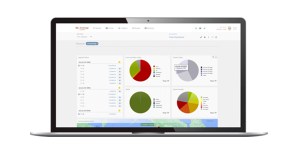
Across many industries, cloud-based router management is widely used for maintaining distributed networks. As fleets of connected devices grow and spread, centralized cloud platforms provide consistent visibility and control without adding operational complexity.
Cloud management allows teams to monitor device status and connectivity across large fleets from a single interface. New routers can be onboarded quickly using standardized configurations, and firmware or software updates can be deployed consistently across hundreds or thousands of devices.
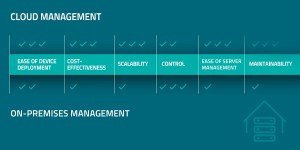
By shifting platform maintenance to the vendor, cloud-based management reduces internal overhead. Updates, security patches and feature enhancements are delivered continuously without requiring customers to operate backend infrastructure. This combination of scalability and ease of use makes cloud management a strong fit for many commercial and industrial deployments.
Why On-Premises Management Still Matters
For some industries, on-premises management remains a requirement rather than a preference. In these environments, internal policies, regulatory interpretations or operational mandates may favor locally controlled management systems, even when compliant cloud options are available.
This is especially common in federal, defense, utilities and other mission-critical environments, where management systems must operate within controlled networks or fully air-gapped architectures. In these cases, on-premises management enables organizations to meet compliance requirements while maintaining operational control over their networking infrastructure.
There’s No Single Model—Only the Tight Fit
Cloud versus on-premises is rarely a binary choice. Many organizations operate hybrid environments shaped by regulatory requirements, internal policies and operational realities, and those needs can evolve over time.
Some teams begin with on-premises management and later transition portions of their fleet to the cloud. Others maintain mixed deployments indefinitely. What matters is flexibility: the ability to manage devices in ways that align with current requirements while adapting as policies, architectures and risk profiles change.
More Flexible Options for Router Management
The need for flexibility across cloud, on-premises and hybrid management models reflects how mission-critical networks operate in the real world. Recognizing that reality, Semtech has designed its router management portfolio to support diverse operational, security and compliance requirements without forcing organizations into a single approach.
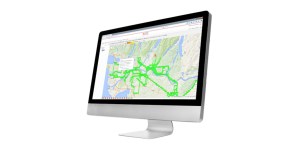
With the general availability of AirLink® Manager / AirLink Mobility Manager (AM/AMM) version 2.18, Semtech expands those options by extending on-premises management support to its latest generation of AirLink OS-based routers. Cloud-based management through AirLink Management Service (ALMS) remains the default offering for new devices, included with AirLink Complete and Premium subscriptions. Additionally, AM/AMM 2.18 adds flexibility for organizations whose policies or operating environments require air-gapped or self-hosted management.
What AM/AMM 2.18 Enables
AM/AMM 2.18 introduces support for AirLink OS devices, Semtech’s newest generation of routers, allowing customers to manage MGOS™, ALEOS® and AirLink OS routers within a single platform. Key capabilities include:
- Device registration, monitoring and status visibility.
- Configuration templates for consistent fleet management.
- Firmware management and controlled upgrades.
- Secure remote access.
- A unified “single pane of glass” across router generations.
This release also protects existing AM/AMM investments by extending platform support rather than requiring a new management system. Semtech will continue to evolve its management offerings through regular updates, enabling customers to adapt as requirements and deployment models change.
Choosing the Right Management Model for Your Network
Choosing a router management model is less about preference and more about operational fit. For mission-critical networks, three factors typically shape that decision.
Compliance and Operational Constraints
Regulatory requirements and internal policies often determine how management platforms can be deployed. Some environments such as federal or defense networks require fully air-gapped operation, while others mandate specific hosting locations or internal IT control. Identifying these constraints early help narrow viable options.
Fleet Size and Scale
Fleet size and geographic distribution also influence the right approach. Large, dispersed deployments often benefit from centralized visibility and automation, while smaller or fixed networks may prioritize control and predictability. As networks evolve, flexibility becomes increasingly important.
IT Resource Model
Organizations must also consider how much infrastructure they want to manage internally. Some teams prefer vendor-managed platforms that reduce operational overhead, while others have the mandate and expertise to operate systems in-house. The right model aligns with both current capabilities and future plans.
Ultimately, the most effective strategies prioritize flexibility, allowing platforms to evolve alongside policy requirements, operational scale and internal resources.
FAQs—Cloud vs. On-Premises Router Management
Q. What is cloud-based router management?
A. Cloud-based router management uses a vendor-hosted platform to monitor, configure and update devices remotely. With Semtech’s AirLink Management Service, customers gain centralized visibility, faster onboarding and continuous updates without requiring customers to manage backend infrastructure.
Q. What is on-premises router management?
A. On-premises router management uses a management platform deployed inside an organization’s own network. This model supports environments that require internal hosting, data sovereignty or fully air-gapped operations.
Q. When is on-premises management required?
A. On-premises management is typically required in environments with strict compliance and data sovereignty requirements, or air-gapped operational policies. This can include some federal, utility, defense, and national-security deployments where external connectivity is restricted or prohibited.
Q. Can I mix cloud and on-premises over time?
A. Yes. Many organizations need to operate hybrid environments or transition between models as policies, infrastructure or operational needs evolve. Choosing a supplier that can support this flexibility is important, especially for long-lived deployments.
Q. Can I achieve data sovereignty with cloud management?
A. In many cases, yes. Cloud platforms are hosted in specific regions, and so if all data going to that cloud management application is hosted solely in a single region—whether a single country or a union of more than one country—then it will support many data sovereignty rules. That’s why Semtech now provides the AirLink Management Service in Canadian and Australian instances in addition to the original EU and North American (US) locations.
Q. Does on-premises management mean less functionality?
A. Not necessarily. On-premises management platforms typically support the same core capabilities as cloud-based solutions, including monitoring, configuration, firmware management, and remote access. However, there are strategic differences: cloud platforms benefit from mutualized investment across many customers, enabling faster feature development and broader capabilities. On-premises platforms may offer more application-specific features tailored to particular use cases but often require heavier upfront and ongoing investment to maintain feature parity. The key consideration is deployment model and your organization’s capacity for platform management, not just feature count.
Q. How do I future-proof management decisions?
A. Future-proofing starts with choosing solutions that support multiple deployment options and can evolve over time. This allows organizations to adapt to regulatory changes, new device generations and shifting operational requirements without replacing management platforms.
Flexible Management for Mission-Critical Networks
Managing routers in mission-critical environments depends on context, constraints and long-term requirements. Regulatory obligations, operational realities and long device lifecycles all shape management decisions.
Semtech understands that reality. With experience supporting regulated industries and long-lived deployments, Semtech’s approach to router management is built around flexibility, supporting cloud, on-premises and hybrid models without forcing organizations into a single path. As policies, infrastructure and requirements evolve, management platforms should evolve with them.
Ready to Manage Your Network Your Way?
Choosing the right router management model today can determine how easily your network adapts tomorrow. Whether your environment prioritizes scale, compliance or operational control, having flexible management options helps ensure long-term resilience.
→ Talk to an expert about router management options

Semtech® and the Semtech logo, AirLink® and ALEOS® are registered trademarks or service marks of Semtech Corporation or its affiliates. Other product or service names mentioned herein may be the trademarks of their respective owners.