

From the racetrack to the IoT Summit, the shift from hype to proof was impossible to miss.
MWC 2026 Barcelona marked the event’s 20th anniversary, drawing nearly 105,000 attendees from 207 countries and territories, across 2,900 exhibitors, sponsors and partners, and making one thing unmistakable: the telecom and Internet of Things (IoT) sector has stopped asking whether artificial intelligence (AI) will reshape connectivity, and started asking who has the infrastructure to deliver it.
GSMA, organizer and host, framed the edition around “The IQ Era”—positioning intelligence as the new value driver. On the show floor, that framing quickly gave way to something more specific: agentic AI dominated the conversation, and the collective question among operators, device makers and enterprise technology teams shifted from who is using AI to who is actually creating impact with it.
The Semtech team was in Barcelona throughout the week, meeting with customers, partners and analysts and participating in two major activations showcasing real-world IoT connectivity solutions.
What Telecom and IoT Leaders Were Talking About
McKinsey partners described MWC 2026 as a turning point. After years of AI ambition, companies are now expected to show results, not roadmaps. Several themes stood out.
AI-native networks and agentic AI (A-IoT). Analysts highlighted a fundamental shift underway: telecom networks are evolving into intelligent infrastructure capable of sensing the physical world and making autonomous decisions. ABI Research flagged “sensorization plus AI” as a key undercurrent, describing how vendors are building a ubiquitous data fabric of the physical world—with robotics, drones and vehicles all relying on physical AI. Agentic AI pairs network intelligence with low-compute devices to enhance return on investment.
5G RedCap and Satellite IoT. Reduced Capability (RedCap) 5G devices are gaining traction, though China leads in adoption, the rest of the world is at the beginning of its curve. Satellite IoT remains in its commercial infancy, but operators are actively working to define use cases, business models and device development to shape the cellular-satellite convergence narrative.
6G: Not yet. According to ABI Research, 6G took a back seat at MWC 2026, with closed-loop automation emerging as the more immediate innovation frontier. The European Telecommunications Standards Institute (ETSI) confirmed that 6G standardization remains in the study phase, with final specifications not expected before 2029.
The broader signal for IoT solution builders and enterprise buyers: the infrastructure layer—reliable, low-power, always-on connectivity from the sensor to the cloud—has never mattered more. Agentic AI applications don’t run on ambition.
Semtech at CircuitX: 5G IoT Connectivity at Race Speed
Before MWC 2026 opened its doors, Semtech was already on track—literally.
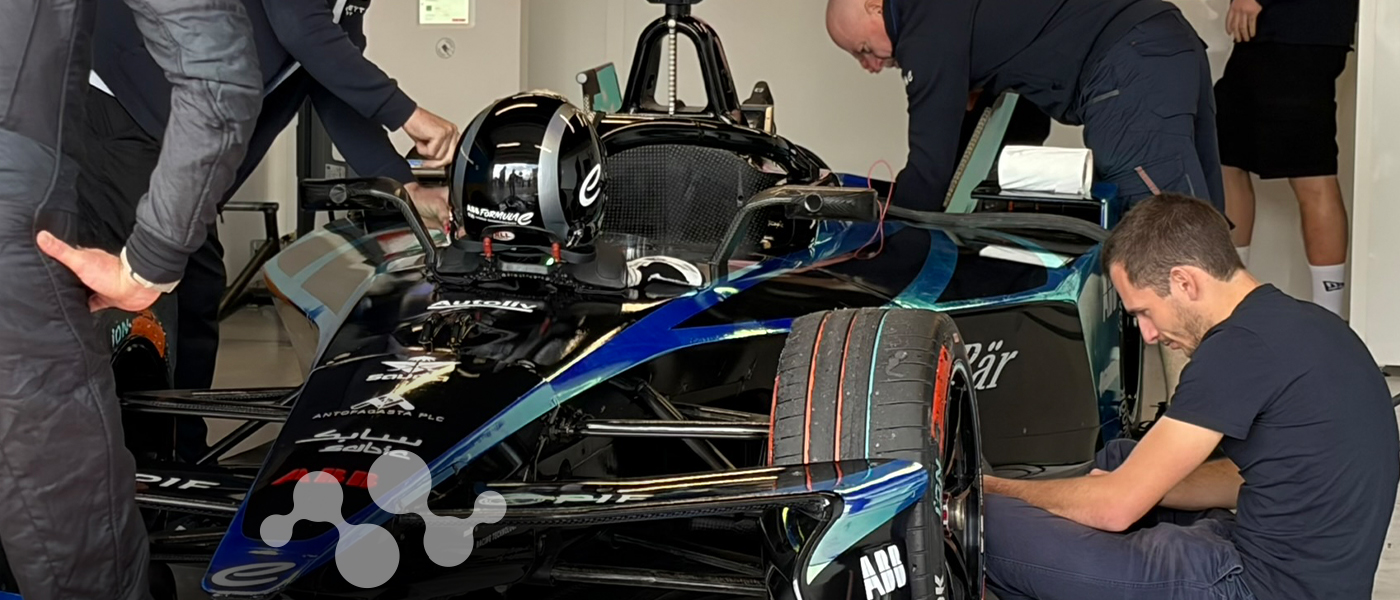
On March 1, the Circuit de Barcelona-Catalunya hosted CircuitX, an invite-only live technology showcase organized by GSMA Foundry, Fira Circuit and Mobile World Capital. Demos ran over live 5G networks and included teledriven cars, AI-powered race telemetry, drone-based crowd security, and augmented reality/virtual reality (AR/VR) fan experiences. CircuitX’s five pillars—travel and navigation, security and safety, crowd flow, fan experience, and race telemetry—served as a direct blueprint for smart venues, industrial campuses and smart cities well beyond motorsport.
Semtech partnered with Al Kamel Systems and Domo Broadcast Systems to demonstrate how ultra-low-latency 5G connectivity networks transform real-time race operations and enable in-car high-definition (HD) video broadcasting. The AirLink® XR60 5G router provided consistent HD video streaming from the Formula E car, illustrating what reliable, low-latency IoT connectivity looks like under real-world, high-stakes conditions.
Semtech at the GSMA IoT Summit: One Billion Cellular Connections
At MWC 2026, Semtech joined the GSMA IoT Summit to mark a historic milestone: one billion cellular Low Power Wide Area Network (LPWAN) devices deployed globally.
Semtech has been a long-standing contributor to LPWAN standards. As we noted in our recent blog post, “How Cellular LPWAN Reached One Billion Connections—and What Comes Next,” this didn’t happen overnight. Nicolas Damour, senior director for strategic partnerships at Semtech, was featured in the GSMA’s official milestone video, reflecting the role Semtech has played in reaching that number.

Semtech on Stage: Future-Proofing 5G IoT
Damour also presented at the GSMA IoT Summit in a session titled “Cellular IoT Technology Roadmap—Future Proofing 5G IoT,” representing Sony’s Igor Tovberg. The session traced the full arc of cellular IoT evolution and its implications for enterprise decision-makers:
- LTE-M and NB-IoT for size-, cost- and power-constrained applications, ensuring IoT longevity throughout the 5G era.
- 4G CAT1/CAT1bis for higher data-rate applications. With sunsetting expected to begin in 2030, this technology warrants caution in applications with a lifecycle of 15 years or more.
- 5G eRedCap (Enhanced Reduced Capacity, 3GPP Release 18) as the 5G successor of LTE Cat-1 and Cat-1 bis, suited for applications with mid-range data throughput and long lifespans.
The core message was direct: the cellular IoT roadmap is not a single lane. Choosing the right connectivity technology tier today—while planning the migration path forward—is what genuine future-proofing looks like for enterprise decision-makers currently running LTE-M, CAT1 or early 5G RedCap deployments.
How Semtech Contributes to the Next Wave of IoT
MWC 2026 made one thing clear: operators and enterprise buyers have moved past the question of whether AI will transform IoT. The question now is who has the infrastructure to deliver it.
Semtech’s chips-to-cloud stack—spanning ultra-low-power LTE-M/NB-IoT modules, 5G RedCap routers, LoRa® transceivers, and managed global cellular and Non-Terrestrial Network (NTN) satellite connectivity services—is precisely the kind of power-efficient, multi-bearer foundation that agentic AI applications demand at the edge.
The next wave of IoT connectivity isn’t waiting. Neither are we.

Semtech®, the Semtech logo, AirLink®, and LoRa® are registered trademarks or service marks of Semtech Corporation or its affiliates. Other product or service names mentioned herein may be the trademarks of their respective owners.